Dentures
Digital vs. Traditional Dentures: What Actually Matters for You?
Digital vs. Traditional Dentures: What Actually Matters for You?
Compare digital and traditional dentures, including fit, accuracy, appointments, try-ins, and how the right approach depends on your individual needs.
Compare digital and traditional dentures, including fit, accuracy, appointments, try-ins, and how the right approach depends on your individual needs.

Philip Sungeun Kim
7 min read
Philip Sungeun Kim
Owner | Licensed and Registered Denturist
Restoring confidence and function through dentures
Share Article:
Digital vs. Traditional Dentures: What Actually Matters for You?
If you are looking for new dentures, you have probably heard terms such as digital dentures, 3D scanning, and traditional impressions. But as a patient, you may be wondering:
Will my dentures fit better? Will they look natural? Will I be able to eat comfortably—and will someone actually listen to what I want?
Those are the questions that matter.
Digital technology can help us make dentures more efficiently and consistently. Traditional techniques can give us valuable information that a scanner may not capture in every mouth. Neither method is automatically best for every patient.
At Premium Denture Clinic, we do not begin by deciding that your denture must be made one particular way. We begin by listening to you, examining your mouth, and understanding what you need your new dentures to improve.
We then use the combination of digital and traditional tools that gives us the best chance of creating the right result for you.
Your Dentures Should Solve Your Problems
Two people can both need complete dentures and still require very different treatment.
You may be struggling with loose dentures that move while you eat. Someone else may feel embarrassed because their teeth look too large or artificial. Another person may have sore gums, difficulty speaking, poor lip support, or a bite that never feels comfortable.
Before discussing scanners or materials, we want to understand:
What bothers you about your current dentures?
What foods are difficult for you to eat?
Do your dentures move, pinch, or cause sore spots?
Are you happy with the appearance of your smile?
Do you want a natural-looking smile or a brighter, more uniform appearance?
Have you had a previous denture experience that left you frustrated?
Is completing treatment quickly important to you?
Would you prefer additional try-in appointments to make sure everything looks and feels right?
Your answers affect how we plan your treatment.
Technology is useful—but only after we understand what a successful result means to you.
How Can Digital Dentures Improve Your Experience?
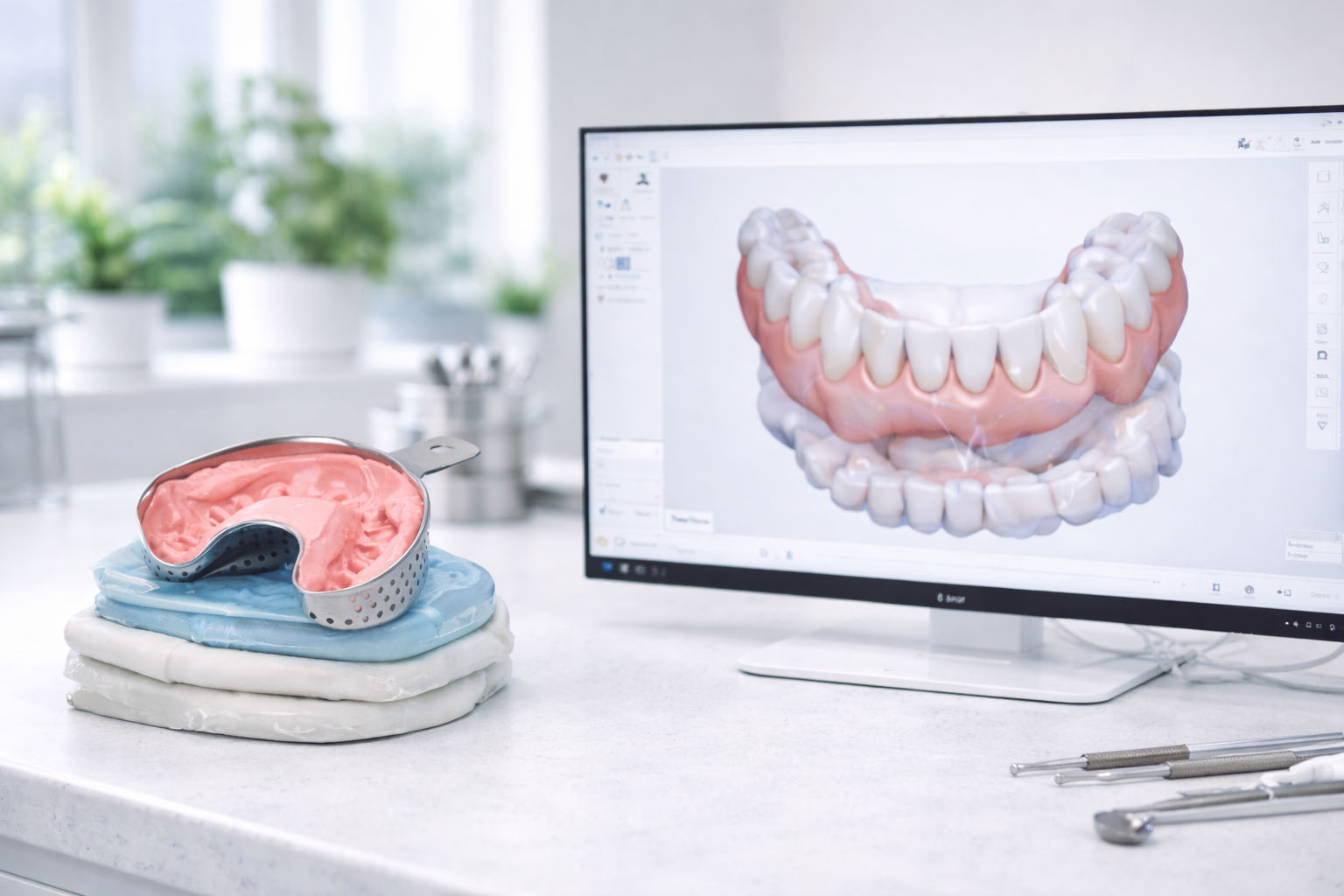
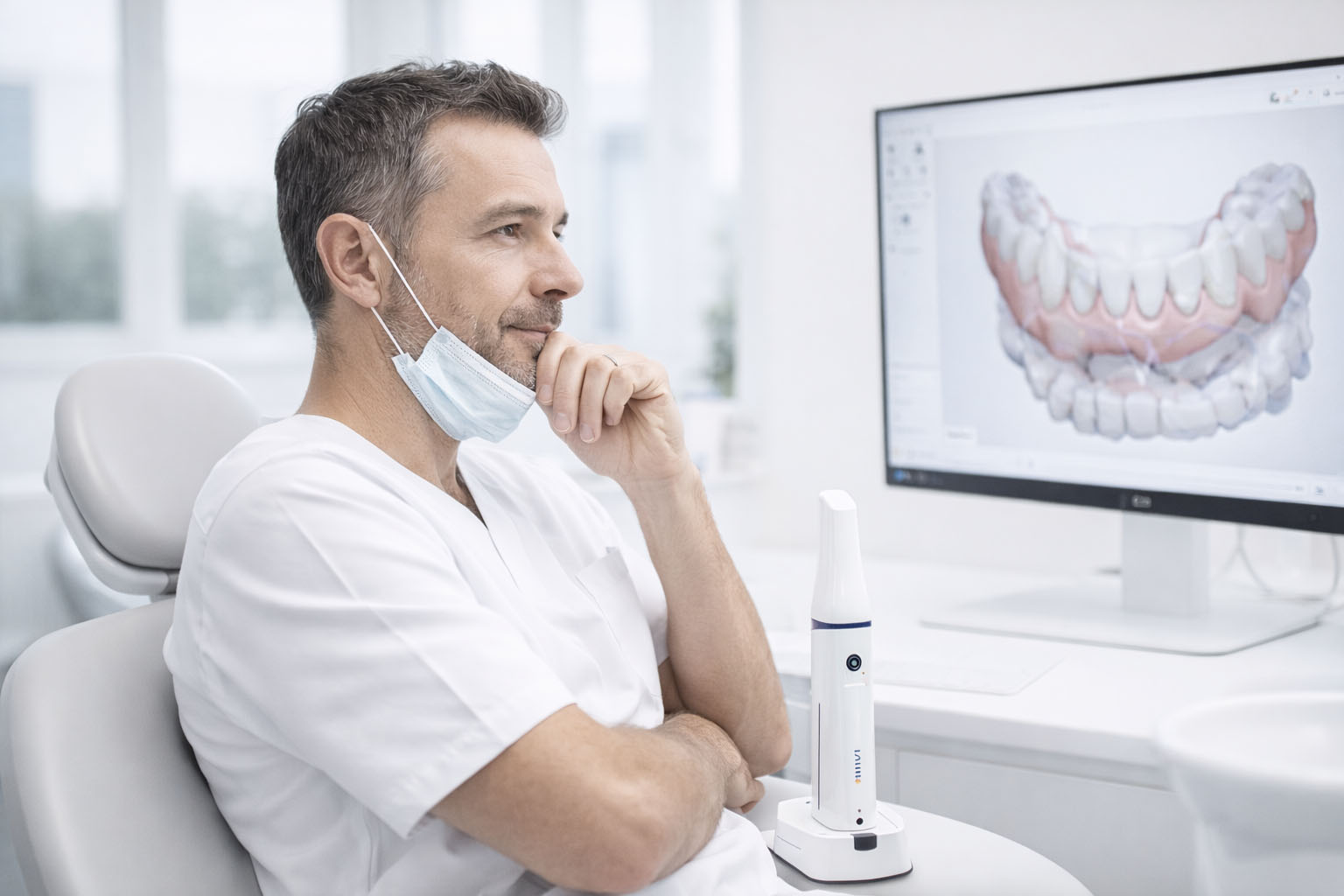
Digital dentures are designed using specialized computer software. Your mouth, impressions, models, bite, or existing dentures can be converted into a detailed digital record.
We can then use that information to plan the position of the teeth, the bite, and the shape of the denture.
For you, this may provide three meaningful advantages.
1. A Faster and More Efficient Process
Traditional dentures often require separate appointments for impressions, bite records, a wax try-in, and delivery.
In suitable cases, digital technology may allow us to combine certain stages and reduce the number of appointments you need.
This can be helpful if you:
Have difficulty travelling
Live far from the clinic
Have a demanding schedule
Need a replacement denture quickly
Already have dentures with a bite or appearance you like
However, we will not remove an appointment simply to say that your dentures were made faster.
If another impression, bite record, or try-in will meaningfully improve your result, we will recommend it. The goal is to avoid unnecessary appointments—not necessary care.
2. Greater Consistency and Accuracy
Once a digital denture is designed, specialized equipment can reproduce that design very precisely.
For you, this may mean a finished denture that stays closer to the planned shape, fit, and tooth position, with fewer changes occurring during the laboratory process.
However, a precisely manufactured denture is only as good as the information used to design it.
If the impression or bite is inaccurate, a computer will reproduce that inaccuracy precisely. That is why our clinical assessment and the records we take are still so important.
Digital technology can improve accuracy, but it does not replace clinical judgment.
3. Your Design Can Be Saved
A digital denture design can be stored.
If you are happy with your dentures and they are later lost or damaged, the saved design may give us a valuable starting point for producing a close replacement.
We may still need to reassess your mouth because your gums and jaw naturally change over time. However, we may not have to recreate every detail of your smile from the beginning.
Your preferred tooth shape, position, bite, and appearance may already be recorded.
Why Would We Still Use Traditional Techniques?
An intraoral scanner is excellent at recording many details, but it is not automatically the best tool for every part of every denture.
The gums underneath a denture are soft and movable. They behave differently when you speak, chew, swallow, or move your lips and tongue. In some mouths, a carefully made traditional impression gives us better control over how these tissues are recorded.
Traditional wax try-ins are also extremely useful. They allow you to see the planned teeth in your mouth before the denture is finished.
During a try-in, we can evaluate:
How the teeth look with your face
How much tooth shows when you smile
Whether your lips have the right support
How clearly you can speak
How your upper and lower teeth meet
Whether you want anything changed
Using a traditional impression or try-in does not mean your treatment is outdated. It means we selected the tool that provides the most useful information for your situation.
Our Approach: Use the Best of Both
At Premium Denture Clinic, we believe the best process is the one that fits the patient—not the one that sounds the most impressive.
For one patient, we may use a scanner to capture and communicate highly detailed information. For another, we may take a traditional functional impression to better record the gums.
In many cases, we combine the two: proven hands-on clinical techniques to obtain accurate records, followed by digital design or manufacturing for greater consistency.
This personalized approach allows us to focus on the results you actually care about:
A denture that feels secure and comfortable
A bite that helps you chew more confidently
Teeth that suit your face and look natural
A process that is efficient without feeling rushed
The opportunity to explain what you want and be heard
Digital Technology Is a Tool. Listening Is Where Good Treatment Begins.
The most advanced equipment cannot decide what looks natural to you.
It cannot tell us which problems have been frustrating you, what you liked about a previous denture, or what you hope will be different this time.
That comes from sitting down with you, asking the right questions, and paying attention to your answers.
Once we understand your priorities, digital and traditional tools help us translate those priorities into your treatment.
You are not being fitted into a predetermined system. The system is selected and adapted around you.
Which Option Is Right for You?
You do not need to decide between digital and traditional dentures before your appointment.
During your consultation, we will assess your mouth, review your current dentures, discuss what you like and dislike, and identify exactly what you want to improve.
We will then explain which techniques we recommend—and why.
The real advantage is not simply having access to new technology. It is having a provider who knows when to use it, when a traditional technique may work better, and how to combine both to achieve the best possible result for you.
If your current dentures are loose, uncomfortable, difficult to eat with, or no longer look the way you want, book a free consultation with Premium Denture Clinic.
We will listen first, assess your individual situation, and create a treatment plan around your needs.
Digital vs. Traditional Dentures: What Actually Matters for You?
If you are looking for new dentures, you have probably heard terms such as digital dentures, 3D scanning, and traditional impressions. But as a patient, you may be wondering:
Will my dentures fit better? Will they look natural? Will I be able to eat comfortably—and will someone actually listen to what I want?
Those are the questions that matter.
Digital technology can help us make dentures more efficiently and consistently. Traditional techniques can give us valuable information that a scanner may not capture in every mouth. Neither method is automatically best for every patient.
At Premium Denture Clinic, we do not begin by deciding that your denture must be made one particular way. We begin by listening to you, examining your mouth, and understanding what you need your new dentures to improve.
We then use the combination of digital and traditional tools that gives us the best chance of creating the right result for you.
Your Dentures Should Solve Your Problems
Two people can both need complete dentures and still require very different treatment.
You may be struggling with loose dentures that move while you eat. Someone else may feel embarrassed because their teeth look too large or artificial. Another person may have sore gums, difficulty speaking, poor lip support, or a bite that never feels comfortable.
Before discussing scanners or materials, we want to understand:
What bothers you about your current dentures?
What foods are difficult for you to eat?
Do your dentures move, pinch, or cause sore spots?
Are you happy with the appearance of your smile?
Do you want a natural-looking smile or a brighter, more uniform appearance?
Have you had a previous denture experience that left you frustrated?
Is completing treatment quickly important to you?
Would you prefer additional try-in appointments to make sure everything looks and feels right?
Your answers affect how we plan your treatment.
Technology is useful—but only after we understand what a successful result means to you.
How Can Digital Dentures Improve Your Experience?
Digital dentures are designed using specialized computer software. Your mouth, impressions, models, bite, or existing dentures can be converted into a detailed digital record.
We can then use that information to plan the position of the teeth, the bite, and the shape of the denture.
For you, this may provide three meaningful advantages.
1. A Faster and More Efficient Process
Traditional dentures often require separate appointments for impressions, bite records, a wax try-in, and delivery.
In suitable cases, digital technology may allow us to combine certain stages and reduce the number of appointments you need.
This can be helpful if you:
Have difficulty travelling
Live far from the clinic
Have a demanding schedule
Need a replacement denture quickly
Already have dentures with a bite or appearance you like
However, we will not remove an appointment simply to say that your dentures were made faster.
If another impression, bite record, or try-in will meaningfully improve your result, we will recommend it. The goal is to avoid unnecessary appointments—not necessary care.
2. Greater Consistency and Accuracy
Once a digital denture is designed, specialized equipment can reproduce that design very precisely.
For you, this may mean a finished denture that stays closer to the planned shape, fit, and tooth position, with fewer changes occurring during the laboratory process.
However, a precisely manufactured denture is only as good as the information used to design it.
If the impression or bite is inaccurate, a computer will reproduce that inaccuracy precisely. That is why our clinical assessment and the records we take are still so important.
Digital technology can improve accuracy, but it does not replace clinical judgment.
3. Your Design Can Be Saved
A digital denture design can be stored.
If you are happy with your dentures and they are later lost or damaged, the saved design may give us a valuable starting point for producing a close replacement.
We may still need to reassess your mouth because your gums and jaw naturally change over time. However, we may not have to recreate every detail of your smile from the beginning.
Your preferred tooth shape, position, bite, and appearance may already be recorded.
Why Would We Still Use Traditional Techniques?
An intraoral scanner is excellent at recording many details, but it is not automatically the best tool for every part of every denture.
The gums underneath a denture are soft and movable. They behave differently when you speak, chew, swallow, or move your lips and tongue. In some mouths, a carefully made traditional impression gives us better control over how these tissues are recorded.
Traditional wax try-ins are also extremely useful. They allow you to see the planned teeth in your mouth before the denture is finished.
During a try-in, we can evaluate:
How the teeth look with your face
How much tooth shows when you smile
Whether your lips have the right support
How clearly you can speak
How your upper and lower teeth meet
Whether you want anything changed
Using a traditional impression or try-in does not mean your treatment is outdated. It means we selected the tool that provides the most useful information for your situation.
Our Approach: Use the Best of Both
At Premium Denture Clinic, we believe the best process is the one that fits the patient—not the one that sounds the most impressive.
For one patient, we may use a scanner to capture and communicate highly detailed information. For another, we may take a traditional functional impression to better record the gums.
In many cases, we combine the two: proven hands-on clinical techniques to obtain accurate records, followed by digital design or manufacturing for greater consistency.
This personalized approach allows us to focus on the results you actually care about:
A denture that feels secure and comfortable
A bite that helps you chew more confidently
Teeth that suit your face and look natural
A process that is efficient without feeling rushed
The opportunity to explain what you want and be heard
Digital Technology Is a Tool. Listening Is Where Good Treatment Begins.
The most advanced equipment cannot decide what looks natural to you.
It cannot tell us which problems have been frustrating you, what you liked about a previous denture, or what you hope will be different this time.
That comes from sitting down with you, asking the right questions, and paying attention to your answers.
Once we understand your priorities, digital and traditional tools help us translate those priorities into your treatment.
You are not being fitted into a predetermined system. The system is selected and adapted around you.
Which Option Is Right for You?
You do not need to decide between digital and traditional dentures before your appointment.
During your consultation, we will assess your mouth, review your current dentures, discuss what you like and dislike, and identify exactly what you want to improve.
We will then explain which techniques we recommend—and why.
The real advantage is not simply having access to new technology. It is having a provider who knows when to use it, when a traditional technique may work better, and how to combine both to achieve the best possible result for you.
If your current dentures are loose, uncomfortable, difficult to eat with, or no longer look the way you want, book a free consultation with Premium Denture Clinic.
We will listen first, assess your individual situation, and create a treatment plan around your needs.
Recommendations
Related Dental Articles

Feel Like Yourself Again, Starting With Your Smile.
Your denture should feel comfortable, look natural, and help you live with confidence.
Let’s find a personalized solution designed around you.
CDCP Accepted · All Insurance Accepted · Richmond, BC

Feel Like Yourself Again, Starting With Your Smile.
Your denture should feel comfortable, look natural, and help you live with confidence. Let’s find a personalized solution designed around you.
CDCP Accepted · All Insurance Accepted · Richmond, BC
Feel Like Yourself Again, Starting With Your Smile.
Your denture should feel comfortable, look natural, and help you live with confidence.
Let’s find a personalized solution designed around you.
CDCP Accepted · All Insurance Accepted · Richmond, BC